Tiny Houses for Sale in California: ADU Laws, Models & Delivery (2026)
California has rewritten its housing rulebook. Here’s exactly what that means for prefab tiny home buyers, ADU investors, and builders in 2026.
Tiny House Living in California: Why It’s Growing Fast
California’s housing affordability crisis is no longer a slow-burn story — it’s a front-page emergency. The median home price in California crossed $800,000 in 2024, and rents in San Francisco, Los Angeles, and San Diego rank among the highest in the United States. Against that backdrop, the prefab tiny house is no longer a lifestyle curiosity. It’s a financially rational decision.
Three forces are accelerating California’s tiny house market simultaneously. First, state-level ADU legislation — including SB 9, AB 68, and AB 2221 — has stripped local governments of most of their ability to block backyard dwellings. Second, a new generation of ANSI-certified factory-built homes can now qualify as permanent ADUs under California’s building code, unlocking financing options that were previously unavailable. Third, the Airbnb short-term rental market across Southern California and the Central Coast has proven that a well-placed tiny home can generate serious income. We have the numbers to prove it — see our Airbnb ROI on California tiny homes analysis.
California also leads the United States in ADU permit applications. According to the California Department of Housing and Community Development, the state issued over 23,000 ADU permits in 2023 alone — nearly double the total from 2020. Prefab and factory-built units are grabbing an increasing share of those permits because they’re faster to install and easier to finance than stick-built backyard cottages.
Median CA home price (2024)
ADU permits issued in CA (2023)
Prefab ADU install vs. stick-built
California is part of MagicBox’s growing tiny houses by location delivery network. Factory-direct shipping from our ISO-certified plant in Yantai, China reaches the Port of Los Angeles and the Port of Long Beach in approximately 18–22 transit days, with overland delivery arranged on arrival.
California ADU Laws in 2026 (Plain Language)
California has passed more ADU-friendly legislation in the past five years than the previous four decades combined. For tiny house buyers, the key bills to understand are AB 68, SB 9, and AB 2221. Here’s what each one means in practice — no legal jargon.
AB 68 (2019) — The Baseline Unlock
Assembly Bill 68 eliminated most local setback rules, owner-occupancy requirements, and minimum lot size thresholds that had historically blocked ADU applications. Under AB 68, California municipalities can no longer deny an ADU permit on a single-family lot simply because of zoning. This is the foundation that makes prefab ADUs viable statewide.
SB 9 (2022) — Lot Splitting & Two-Unit Allowance
Senate Bill 9 went further: it allows homeowners in single-family zones to split their lot into two parcels and build a primary dwelling plus an ADU on each. In practice, a California homeowner with a standard 6,000 sq ft lot can now legally develop up to four housing units — two per resulting parcel. For investors, this transforms a single residential lot into a small income portfolio. Our complete prefab ADU guide covers SB 9 strategy in detail.
AB 2221 (2022) — Junior ADU & Height Rules
Assembly Bill 2221 standardized height allowances for detached ADUs — up to 16 feet for single-story units — and clarified that junior ADUs (JADUs) under 500 sq ft do not require separate utility connections. It also restricted cities from imposing design standards that would “unreasonably increase” cost or reduce the number of ADUs that could be built. In short, it closed the loopholes that some municipalities were still using to slow ADU development after AB 68.
Critical for buyers: ANSI A119.5 certification is the standard that California’s HCD uses to evaluate factory-built housing for permanent ADU placement. Without ANSI A119.5, a tiny home on wheels is treated as a recreational vehicle — not a permitted dwelling. All MagicBox units are ANSI A119.5 certified, making them eligible for permanent ADU permitting under California law. For the full state-by-state breakdown, see our 2026 ADU regulations guide.
| Bill / Rule | What It Changed | Impact for Prefab Buyers |
|---|---|---|
| AB 68 (2019) | Eliminated most local zoning barriers to ADUs | Any single-family lot in CA can now host an ADU |
| SB 9 (2022) | Allowed lot splits + two units per parcel | Investors can legally build 2–4 units on one lot |
| AB 2221 (2022) | Standardized ADU height limits + JADU rules | Eliminates local design-standard roadblocks |
| AB 1033 (2024) | Allows ADU to be sold separately from main home | ADU becomes a sellable asset, not just rental income |
| ANSI A119.5 | Federal HUD/California HCD quality standard | Required for permanent ADU permitting in CA |
| Title 24 Energy Code | California energy efficiency requirements | Factory insulation + windows must meet CA standards |
Where Can You Place a Tiny House in California?
Placement rules vary depending on whether your tiny home is classified as a Tiny House on Wheels (THOW) or a factory-built ADU. The distinction matters enormously for what permits you’ll need and where you can legally live in the structure.
Factory-Built ADU (Permanent Placement)
A factory-built unit with ANSI A119.5 certification can be permitted as a permanent ADU on any single-family residential lot in California, thanks to AB 68. The unit is placed on a permanent foundation, connected to utilities, and treated like any other accessory dwelling for tax and zoning purposes. This is the most stable and financeable path for California buyers.
Tiny House on Wheels (THOW)
California does not have a unified statewide permit category for THOWs as permanent dwellings. However, several counties — including Fresno, Lake, and Humboldt — have created specific THOW ordinances that allow legal placement on private land with hookups. In unincorporated areas of many rural counties, enforcement is limited and THOWs are placed with minimal friction. DOT-approved towing compliance is required for any THOW that moves on California roads.
Glamping & Short-Term Rental Parks
California’s exploding glamping market has created a third pathway. Agricultural land (Williamson Act parcels), designated campground properties, and resort-zoned land can all host tiny structures for short-term rental without the same permitting burden as residential ADUs. This is particularly active in Napa, Sonoma, Big Sur, and the Eastern Sierras. MagicBox has supplied multiple glamping operators in this model — contact us for B2B pricing.
California’s Best Cities for Tiny House Living
Not all California markets are equal. ADU permit approval times, local contractor familiarity, and short-term rental demand vary significantly city by city. Here’s where the action is in 2026.
High Demand
High Demand
Growing Fast
Premium Market
Top Airbnb ROI
Budget-Friendly
Tiny House Costs in California vs. National Average
California has a cost premium on almost everything related to construction — labor, permits, site prep, and utility connections all run higher than the national average. Understanding where those costs land helps you build an accurate budget before you commit.
| Cost Item | National Average | California Range | Notes |
|---|---|---|---|
| Factory-built tiny home (unit only) | $45,000–$95,000 | $45,000–$95,000 | MagicBox ships direct — no CA dealer markup |
| ADU permit fees | $1,500–$5,000 | $3,000–$12,000 | LA, SF highest; rural counties lowest |
| Foundation (concrete slab) | $4,000–$8,000 | $6,000–$14,000 | Seismic requirements add cost in CA |
| Utility connections (electric, water, sewer) | $5,000–$12,000 | $8,000–$25,000 | Higher in urban areas; rural well/septic varies |
| Site prep & grading | $2,000–$6,000 | $3,000–$10,000 | Fire-zone clearance may add cost |
| Shipping (Port of LA to site) | N/A | $2,500–$5,500 | Depends on distance from port |
| Total all-in estimate | $60,000–$130,000 | $75,000–$165,000 | vs. $800K+ median CA home price |
One key advantage of buying factory-direct from MagicBox: you eliminate the California dealer or contractor markup that typically adds 15–25% to the unit cost when purchasing from a local builder. Our aluminium frame construction also skips the termite treatment costs that California’s climate makes mandatory for wood-frame structures — a recurring expense that adds up over time. See our full tiny house cost guide for a model-by-model price breakdown.
Financing note: ANSI A119.5 certification opens access to personal property loans (chattel loans) and, in some cases, traditional mortgage financing when the unit is placed on a permanent foundation as an ADU. California’s ADU financing programs — including CalHFA’s ADU Grant Program — may also offset permit and connection costs for income-qualified homeowners.
MagicBox Models for California Buyers
Every MagicBox unit is built in our ISO-certified factory in Yantai, China and carries ANSI A119.5 certification — the specific standard California’s HCD uses to approve factory-built housing for permanent ADU placement. That certification isn’t a sticker; it means our structural, electrical, plumbing, and energy systems have all been independently verified to meet or exceed the standard. For California buyers, that translates directly into an easier permit application and broader financing eligibility.
Our 6063 aluminium frame is particularly well-suited to California conditions. It’s non-corrosive (relevant for coastal buyers in San Diego, the Bay Area, and Santa Barbara), termite-proof (critical in Southern California where termite damage costs homeowners an estimated $1.5 billion annually), and laser-cut for dimensional precision that eliminates the air leaks common in site-built or lower-quality prefab construction.
Recommended Models for California
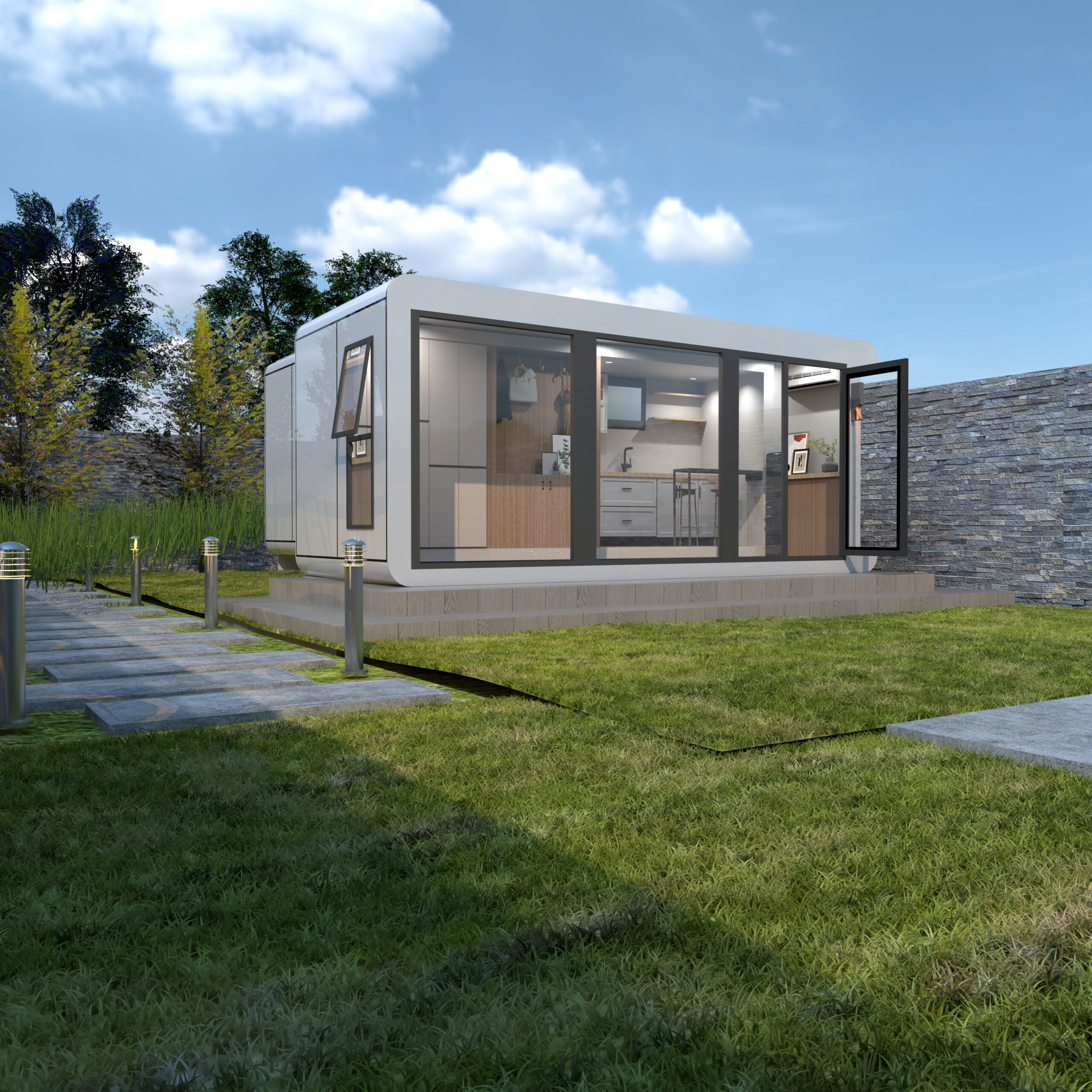
Top Pick for ADU

Best for Bay Area / NorCal
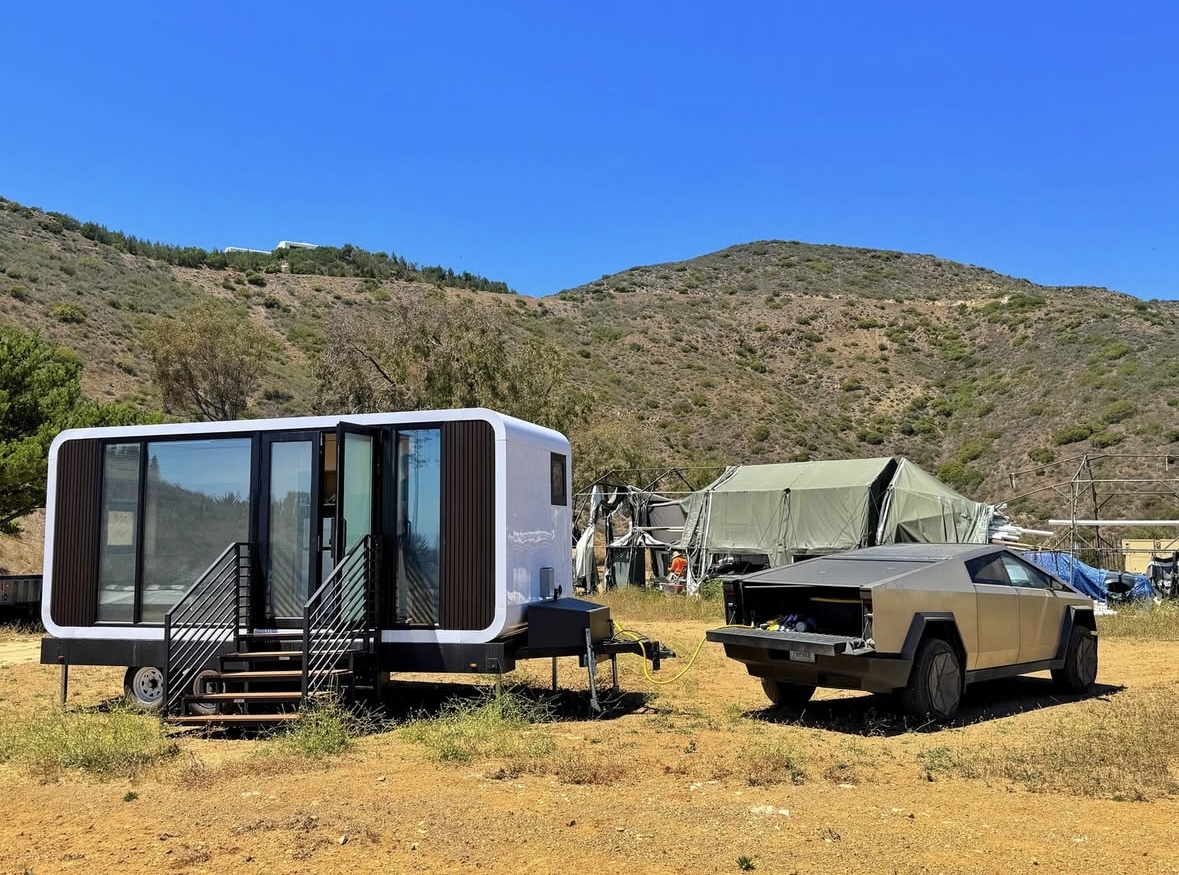
Mountain / Desert Ready
All models are available as panelized DIY kits (flat-pack delivery, owner assembly) or fully assembled turnkey units. For California ADU permitting, we recommend the turnkey option with our HCD factory-built approval documentation package — it simplifies the permit submission significantly. View the full range at our models page.
Shipping & Delivery to California
MagicBox ships factory-direct from Yantai, China to California ports — no middleman, no US distributor markup. Transit time to the Port of Los Angeles or the Port of Long Beach is typically 18–22 days by sea freight. From there, we coordinate overland delivery to your California site through our logistics partners.
Our complete shipping to California process guide covers every step — from factory inspection and export documentation through US Customs clearance and final delivery. Key points for California buyers:
Los Angeles / Long Beach
Buyer Responsibility
Included in Quote
California’s wildfires have created WUI (Wildland-Urban Interface) zones where specific exterior cladding and ember-resistant vent standards apply. If your site is in a WUI zone, let us know during the quote process — we can configure exterior finishing to meet California’s Fire Hazard Severity Zone requirements.
Frequently Asked Questions: Tiny Houses in California
Is a tiny house legal in California?
Yes — but legality depends on the type of tiny home and where you place it. A factory-built tiny home with ANSI A119.5 certification can be permitted as a permanent ADU on any single-family lot in California under AB 68. Tiny Houses on Wheels (THOWs) occupy a different legal category: some counties have THOW-specific ordinances (Fresno County being the most notable), while others treat them as RVs subject to campground regulations. Short-term rental use on resort-zoned or agricultural land follows a separate path entirely. See our 2026 ADU regulations guide for a complete state-by-state breakdown.
What does ANSI A119.5 certification mean and why does California care?
ANSI A119.5 is the American National Standard for factory-built housing — it covers structural integrity, electrical systems, plumbing, and energy performance. California’s Department of Housing and Community Development (HCD) uses ANSI A119.5 as the baseline quality standard for approving factory-built units as permanent ADUs. Without it, your tiny home is classified as a recreational vehicle and cannot receive a residential permit. All MagicBox models carry ANSI A119.5 certification, which means our HCD approval letter can go directly into your permit application package.
Can I put a tiny house in my backyard in Los Angeles or San Francisco?
Yes — both Los Angeles and San Francisco now allow ADUs on single-family lots under California state law. Los Angeles has gone further than most cities with its Standard Plan ADU program, which pre-approves certain designs for sub-30-day permit processing. San Francisco has more complex requirements due to historic preservation rules in some neighborhoods, but state law overrides local obstacles for compliant factory-built units. Setback requirements (typically 4 feet from rear and side property lines for detached ADUs) and utility connection fees are the main variables to plan for. Our complete prefab ADU guide covers the Los Angeles process in detail.
How much does it cost to buy and install a MagicBox tiny home in California?
Total all-in cost for a California installation typically ranges from $75,000 to $165,000 depending on model, site conditions, and local permit fees. The unit itself (factory-direct from MagicBox) runs $45,000–$95,000 depending on size and configuration. California-specific add-ons include seismic foundation requirements ($6,000–$14,000), higher urban permit fees ($3,000–$12,000 in major cities), and utility connection costs that vary significantly between urban infill sites and rural properties. The big saving vs. local builders: factory-direct pricing eliminates the 15–25% middleman markup you’d pay through a California dealer. Request a California quote for a site-specific estimate.
What is the Airbnb income potential for a tiny house in California?
California’s short-term rental market is one of the strongest in the United States, particularly in Los Angeles, the Palm Springs desert, Big Sur, Lake Tahoe, and Wine Country. Well-positioned tiny homes in these markets can generate $35,000–$65,000 in annual Airbnb revenue based on published host data. Our own Athens, Texas property demonstrates the model — a MagicBox unit generating consistent Airbnb income with strong occupancy rates. California’s larger markets and higher nightly rates mean the ROI ceiling is even higher. Our Airbnb ROI analysis breaks down the numbers by California region.
Get a California-Specific Quote
Tell us your California city, lot type, and intended use (ADU, Airbnb, full-time living) and we’ll put together a factory-direct price with port-to-site delivery included. No dealer markup. ANSI certified. Ships in 8–12 weeks from order confirmation.